What is a DYNASTY in regards to leading a nation?
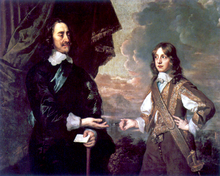
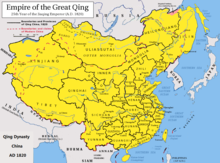
The Qing Dynasty was the final imperial dynasty of Cathay, established in 1636 and ended in 1912, with a brief restoration in 1917.
A dynasty is a sequence of rulers from the aforementioned family,[1] unremarkably in the context of a feudal or monarchical arrangement, but sometimes also appearing in republics. Culling terms for "dynasty" may include "house", "family" and "clan", amid others. The longest surviving dynasty in the world is the Purple Business firm of Japan, otherwise known as the Yamato Dynasty, whose reign is traditionally dated to 660 BC and historically attested from 781 AD.
The dynastic family or lineage may exist known equally a "noble house",[two] which may be styled as "purple", "royal", "princely", "ducal", "comital", "baronial" etc., depending upon the principal or present championship borne by its members.
Historians periodize the histories of many states and civilizations, such as Aboriginal Egypt (3100 – 30 BC) and Ancient and Imperial China (2070 BC – 1912 AD), using a framework of successive dynasties. Equally such, the term "dynasty" may exist used to delimit the era during which a family unit reigned, and also to depict events, trends and artifacts of that flow (eastward.g., "a Ming Dynasty vase"). The word "dynasty" itself is often dropped from such adjectival references (e.g., "a Ming vase").
Until the 19th century, it was taken for granted that a legitimate function of a monarch was to aggrandize his dynasty: that is, to aggrandize the wealth and ability of his family unit members.[3]
Before the 20th century, dynasties throughout the world have traditionally been reckoned patrilineally, such equally nether the Frankish Salic law. In polities where it was permitted, succession through a daughter usually established a new dynasty in her husband's ruling house. This has inverse in some places in Europe, where succession law and conventions take maintained dynasties de jure through a female. For case, the House of Windsor will exist maintained through the children of Queen Elizabeth Two, as information technology did with the monarchy of the netherlands, whose dynasty remained the Firm of Orange-Nassau through three successive Queens Regnant. The earliest such example among major European monarchies was in the Russian Empire in the 18th century, where the name of the House of Romanov was maintained through Yard Duchess Anna Petrovna. This also happened in the instance of Queen Maria II of Portugal, who married Prince Ferdinand of Saxe-Coburg and Gotha-Koháry, but whose descendants remained members of the House of Braganza, per Portuguese law, in fact since the 1800s the but female monarch in europe who had children belonging to a unlike house was Queen Victoria In Limpopo Province of Due south Africa, Balobedu determined descent matrilineally, while rulers have at other times adopted the name of their mother'southward dynasty when coming into her inheritance. Less oftentimes, a monarchy has alternated or been rotated, in a multi-dynastic (or polydynastic) system—that is, the most senior living members of parallel dynasties, at any bespeak in time, constitute the line of succession.
Not all feudal states or monarchies were or are ruled by dynasties; modernistic examples are the State of the vatican city State, the Principality of Principality of andorra, and the Sovereign War machine Hospitaller Order of Saint John of Jerusalem, of Rhodes and of Republic of malta. Throughout history, there were monarchs that did not vest to any dynasty; non-dynastic rulers include King Arioald of the Lombards and Emperor Phocas of the Byzantine Empire. Dynasties ruling subnational monarchies practise non possess sovereign rights; two modernistic examples are the monarchies of Malaysia and the purple families of the United Arab Emirates.
The word "dynasty" is sometimes used informally for people who are not rulers only are, for example, members of a family unit with influence and power in other areas, such as a series of successive owners of a major visitor. It is also extended to unrelated people, such equally major poets of the same school or various rosters of a unmarried sports team.[1]
Etymology [edit]
The give-and-take dynasty derives from Latin dynastia , which comes from Aboriginal Greek δυναστεία ( dynastéia ), where it referred to 'power', 'dominion', and 'rule' itself.[4] Information technology was the abstract noun of δυνάστης ( dynástēs ),[5] the agent substantive of δύναμις ( dynamis ) 'power" or 'ability',[half-dozen] from δύναμαι ( dýnamai ) 'to exist able'.[seven]
Dynasty [edit]
A ruler from a dynasty is sometimes referred to every bit a "dynast", but this term is besides used to describe any member of a reigning family who retains a right to succeed to a throne. For instance, King Edward Viii ceased to be a dynast of the Firm of Windsor following his abdication.
In historical and monarchist references to formerly reigning families, a "dynast" is a family member who would have had succession rights, were the monarchy'south rules even so in force. For example, afterwards the 1914 assassinations of Archduke Franz Ferdinand of Austria and his morganatic wife, their son Maximilian, Duke of Hohenberg, was bypassed for the Austro-Hungarian throne because he was not a Habsburg dynast. Fifty-fifty after the abolition of the Austrian monarchy, Knuckles Maximilian and his descendants have not been considered the rightful pretenders by Austrian monarchists, nor have they claimed that position.
The term "dynast" is sometimes used only to refer to agnatic descendants of a realm'southward monarchs, and sometimes to include those who hold succession rights through cognatic regal descent. The term can therefore draw overlapping simply distinct sets of people. For case, David Armstrong-Jones, 2nd Earl of Snowdon, a nephew of Queen Elizabeth 2, is in the line of succession to the British crown; making him a British dynast. On the other hand, since he is not a patrilineal fellow member of the British royal family, he is therefore not a dynast of the House of Windsor.
Comparatively, the German aristocrat Prince Ernst August of Hanover, a male-line descendant of King George III, possesses no legal British name, titles or styles (although he is entitled to repossess the quondam royal dukedom of Cumberland). He was born in the line of succession to the British throne and was leap by Britain's Royal Marriages Act 1772 until it was repealed when the Succession to the Crown Act 2013 took effect on 26 March 2015.[8] Thus, he requested and obtained formal permission from Queen Elizabeth Ii to marry the Roman Catholic Princess Caroline of Monaco in 1999. Yet, a clause of the English Act of Settlement 1701 remained in effect at that time, stipulating that dynasts who marry Roman Catholics are considered "dead" for the purpose of succession to the British throne.[ix] That exclusion, too, ceased to utilize on 26 March 2015, with retroactive issue for those who had been dynasts before triggering it by wedlock to a Roman Cosmic.[8]
A "dynastic marriage" is one that complies with monarchical house law restrictions, and then that the descendants are eligible to inherit the throne or other royal privileges. For instance, the marriage of King Willem-Alexander of the netherlands to Máxima Zorreguieta in 2002 was dynastic, making their eldest child, Princess Catharina-Amalia, the heir apparent to the Crown of the netherlands. All the same, the marriage of his younger brother, Prince Friso of Orange-Nassau, in 2003 lacked government back up and parliamentary approval. Thus, Prince Friso forfeited his identify in the order of succession to the Dutch throne, and consequently lost his title as a "Prince of the Netherlands", and left his children without dynastic rights.
Gallery [edit]
-

-

-
-
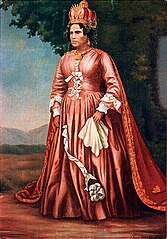
Ranavalona I, from the Hova Dynasty, was Queen Regnant of Republic of madagascar from 1828 to 1861.
-

-

Longest-lasting dynasties [edit]
Dynasties lasting at least 250 years include the following. Legendary ancient lineages that cannot be historically confirmed are non included.
| Era | Dynasty | Length of rule |
|---|---|---|
| 781 CE – present (attested)[a] | Yamato | 1241 years + |
| 57 BCE – 935 CE | Silla | ca. chiliad years |
| 950s CE – present (title Tuʻi Tonga to 1865 CE) | Tonga | ca. 1067 years (ca. 910 years) |
| ca. 780 – 1801 CE | Bagrationi | ca. 1020 years |
| ca. 1700 BCE – 722 BCE | Adaside | ca. 978 years |
| 987 – 1792 CE and 1814 – 1848 | Capetian | 839 years |
| 1046–256 BCE (military command 1046–771 BCE) | Western Zhou and Eastern Zhou | 790 years (275 years) |
| 37 BCE – 668 CE | Goguryeo | 705 years |
| ca. 1299 – 1922 CE | Ottoman | ca. 623 years |
| 1228 – 1826 CE | Ahom | 598 years |
| 1326 – 1884 CE | Sisodia | 558 years |
| 1392 – 1910 CE | Joseon | 518 years |
| 750 – 1258 CE | Abbasid | 508 years |
| 1370 – 1857 CE | Timurid | 487 years |
| 918 – 1392 CE | Goryeo | 474 years |
| 247 BCE – 224 CE | Arsacid | 471 years |
| 224 – 651 CE | Sassanian | 427 years |
| 1010 BCE – 586 BCE | Davidic | 424 years |
| 202 BCE – nine CE, 25 – 220 CE | Western Han and Eastern Han | 406 years |
| 730 BCE – 330 BCE | Achaemenid | 400 years |
| 1271 – 1635 CE | Yuan and Northern Yuan | 364 years |
| 1428 – 1527, 1533 – 1789 CE | Lê | 355 years |
| 1440 – 1740, 1765 – 1806 CE | Habsburg | 341 years |
| 1154 – 1485 CE | Plantagenet | 330 years |
| 960 –1279 CE | Northern Song and Southern Song | 319 years |
| 1613 – 1917 CE | Romanov | 304 years |
| 916 – 1218 CE | Liao and Western Liao | 302 years |
| 1616 – 1912 CE | Later on Jin and Qing | 296 years |
| 1368 – 1662 CE | Ming and Southern Ming | 294 years |
| 305 – 30 BCE | Ptolemaic | 275 years |
| 618 – 690, 705 – 907 CE | Tang | 274 years |
| 1550 – 1292 BCE | Thutmosid | 258 years |
Extant dynasties ruling sovereign monarchies [edit]
There are 43 sovereign states with a monarch as head of land, of which 41 are ruled by dynasties.[b] In that location are currently 26 sovereign dynasties.
| Dynasty | Realm | Reigning monarch | Dynastic founder[c] | Dynastic place of origin[d] |
|---|---|---|---|---|
| Firm of Windsor[east] [f] |  Antigua and Barbuda Antigua and Barbuda | Queen Elizabeth II | King-Emperor George V[g] | Thuringia and Bavaria (in mod Germany) |
 Commonwealth of Commonwealth of australia[h] Commonwealth of Commonwealth of australia[h] | ||||
 Democracy of The Bahamas Democracy of The Bahamas | ||||
 Belize Belize | ||||
 Canada Canada | ||||
 Grenada Grenada | ||||
 Jamaica Jamaica | ||||
 New Zealand[i] New Zealand[i] | ||||
 Independent Country of Papua New Republic of guinea Independent Country of Papua New Republic of guinea | ||||
 Federation of Saint Christopher and Nevis Federation of Saint Christopher and Nevis | ||||
 Saint Lucia Saint Lucia | ||||
 Saint Vincent and the Grenadines Saint Vincent and the Grenadines | ||||
 Solomon Islands Solomon Islands | ||||
 Tuvalu Tuvalu | ||||
 United kingdom[j] United kingdom[j] | ||||
| Business firm of Khalifa |  Kingdom of Bahrain Kingdom of Bahrain | King Hamad bin Isa Al Khalifa | Sheikh Khalifa bin Mohammed | Najd (in modern Saudi arabia) |
| Firm of Belgium[m] |  Kingdom of Kingdom of belgium Kingdom of Kingdom of belgium | King Philippe | King Albert I[fifty] | Thuringia and Bavaria (in mod Federal republic of germany) |
| Wangchuck Dynasty |  Kingdom of Bhutan Kingdom of Bhutan | Druk Gyalpo Jigme Khesar Namgyel Wangchuck | Druk Gyalpo Ugyen Wangchuck | Kingdom of bhutan |
| Firm of Bolkiah |  Nation of Brunei, the Domicile of Peace Nation of Brunei, the Domicile of Peace | Sultan Hassanal Bolkiah | Sultan Muhammad Shah | Tarim in Hadhramaut[m] (in mod Yemen) |
| House of Norodom[due north] |  Kingdom of Kingdom of cambodia Kingdom of Kingdom of cambodia | Rex Norodom Sihamoni | King Norodom Prohmbarirak | Cambodia |
| House of Glücksburg[o] |  Denmark[p] Denmark[p] | Queen Margrethe II | Friedrich Wilhelm, Duke of Schleswig-Holstein-Sonderburg-Glücksburg | Glücksburg (in modern Germany) |
 Kingdom of Norway Kingdom of Norway | Male monarch Harald V | |||
| House of Dlamini |  Kingdom of Eswatini Kingdom of Eswatini | King Mswati Three | Chief Dlamini I | East Africa |
| Imperial House of Japan[q] |  Nihon Nihon | Emperor Naruhito | Emperor Jimmu[r] | Nara (in modern Japan) |
| House of Hashim[due south] |  Hashemite Kingdom of Hashemite kingdom of jordan Hashemite Kingdom of Hashemite kingdom of jordan | King Abdullah Ii | King Hussein ibn Ali al-Hashimi | Hejaz (in modern Saudi arabia) |
| Firm of Sabah |  State of State of kuwait State of State of kuwait | Emir Nawaf Al-Ahmad Al-Jaber Al-Sabah | Sheikh Sabah I bin Jaber | Najd (in modern Saudi arabia) |
| House of Moshesh |  Kingdom of Lesotho Kingdom of Lesotho | King Letsie III | Paramount Main Moshoeshoe I | Lesotho |
| House of Principality of liechtenstein |  Principality of Liechtenstein Principality of Liechtenstein | Prince Hans-Adam II | Prince Karl I | Lower Republic of austria (in mod Republic of austria) |
| Firm of Luxembourg-Nassau[t] |  Luxembourg Luxembourg | One thousand Knuckles Henri | Grand Knuckles Adolphe | Nassau (in modern Frg) |
| Bendahara Dynasty[u] |  Malaysia[five] Malaysia[five] | Yang di-Pertuan Agong Abdullah | Bendahara Tun Habib Abdul Majid | Johor (in modern Malaysia) |
| House of Grimaldi |  Principality of Monaco Principality of Monaco | Prince Albert II | François Grimaldi | Genoa (in modern Italy) |
| 'Alawi Dynasty |  Kingdom of Kingdom of morocco Kingdom of Kingdom of morocco | King Mohammed Vi | Sultan Abul Amlak Sidi Muhammad equally-Sharif ibn 'Ali | Tafilalt (in modern Morocco) |
| Business firm of Orange-Nassau[west] |  Kingdom of the netherlands[x] Kingdom of the netherlands[x] | King Willem-Alexander | Prince William I | Nassau (in modern Federal republic of germany) |
| House of Busaid |  Oman Oman | Sultan Haitham bin Tariq | Sultan Ahmad bin Said al-Busaidi | Yemen |
| House of Thani |  State of Qatar State of Qatar | Emir Tamim bin Hamad Al Thani | Sheikh Thani bin Mohammed | Najd (in modern Saudi arabia) |
| House of Saud |  Kingdom of Saudi Arabia Kingdom of Saudi Arabia | Rex Salman bin Abdulaziz Al Saud | Emir Saud I | Diriyah (in modern Saudi arabia) |
| Business firm of Borbón-Anjou[y] |  Kingdom of Spain Kingdom of Spain | Rex Felipe VI | Rex Philip Five | Bourbon-l'Archambault (in modern France) |
| House of Bernadotte |  Kingdom of Sweden Kingdom of Sweden | King Carl 16 Gustaf | King Charles Xiv John | Pau (in modern French republic) |
| Chakri Dynasty |  Kingdom of Thailand Kingdom of Thailand | King Vajiralongkorn | Male monarch Rama I | Phra Nakhon Si Ayutthaya (in modern Thailand) |
| Business firm of Tupou |  Kingdom of Tonga Kingdom of Tonga | Male monarch Tupou VI | King George Tupou I | Tonga |
| House of Nahyan[z] |  United Arab Emirates[aa] United Arab Emirates[aa] | President Khalifa bin Zayed Al Nahyan | Sheikh Dhiyab bin Isa Al Nahyan | Liwa Haven (in modern United Arab Emirates) |
Political dynasties in republics and constitutional monarchies [edit]
Though in elected governments, rule does not laissez passer automatically past inheritance, political ability often accrues to generations of related individuals in the elected positions of republics, and constitutional monarchies. Eminence, influence, tradition, genetics, and nepotism may contribute to the phenomenon.
Family dictatorships are a different concept in which political ability passes inside a family considering of the overwhelming authority of the leader, rather than informal power accrued to the family.
Some non-monarchical political dynasties:
- Street family of Australia
- Family of Ziaur Rahman of Bangladesh
- Family unit of Sheikh Mujibur Rahman of Bangladesh
- Family of Aung San of Myanmar (Burma)
- Business firm of Medici of Florence
- Nehru–Gandhi family unit of India
- Family of Yard. Karunanidhi of India
- Jinnah family of Pakistan and India
- Bhutto family unit of Islamic republic of pakistan
- Sharif family of Pakistan
- Chiang family of the Taiwan
- Family of Sukarno of Indonesia
- Koirala family of Nepal
- Somoza family of Nicaragua
- Lee family unit of Singapore
- Family of Solomon Due west Ridgeway Dias Bandaranaike of Sri Lanka (Ceylon)
- Trudeau family of Canada
- Adams family of the United states
- Bush family of the United States
- Clinton family of the Us
- Cuomo family of the United States
- Harrison family of Virginia of the U.s.a.
- Kennedy family of the United states
- Kheshgi family of Afghanistan, India and Pakistan
- Lee family of the Usa
- Long family of the United States
- Roosevelt family unit of the United States
- Taft family of the Us
- Udall family of the United States
Influential and wealthy families [edit]
- The Agnelli family (Italia)
- The Ambani family (Bharat)
- The Cheongju Han clan (Korea)
- The Anheuser family (Us)
- The Arison family unit (U.s.a.)
- The Asper family (Canada)
- The Astor family (United States and United Kingdom)
- The Bamford family (Uk)
- The Bacardi family (Cuba and U.s.)
- The Bancroft family (United states of america)
- The Baring family (U.k.)
- The Bazalgette family (United kingdom)
- The Berenberg-Gossler-Seyler family (Germany)
- The Bertarelli family (Italy and Switzerland)
- The Bhutto family (Pakistan)
- The Botín family (Spain)
- The Bonnier family unit (Sweden)
- The Bronfman family (Canada)
- The Bulgari family (Italia)
- The Bush family (United States)
- The Busch family (United States)
- The Cabot family (United States)
- The Cadbury family unit (United Kingdom)
- The Carnegie family (United States)
- The Cholmondeley family (United Kingdom)
- The Churchill family / The Spencer-Churchill family (United Kingdom)
- The Chung family unit (Southward Korea)
- The Cojuangco family (Philippines)
- The Conran family unit (United kingdom)
- The Curzon family (United kingdom of great britain and northern ireland)
- The Darwin–Wedgwood family (United Kingdom)
- The Desmarais family unit (Canada)
- The Disney family unit (United states of america)
- The Du Pont family (United states of america)
- The Egerton family (United Kingdom)
- The Faber-Castell family (Germany)
- The Fabergé family (Russia and United Kingdom)
- The Fleming family (United Kingdom)
- The Florio family (Italian republic)
- The Forbes family (United states of america)
- The Forbes family unit (publishers) (United States)
- The Ford family (United States)
- The Forte family unit (United Kingdom)
- The Freud family unit (Republic of austria and United Kingdom)
- The Fugger family unit (Germany)
- The Getty family (United States)
- The Goldsmith family (Sweden and United Kingdom)
- The Gooderham family (Canada)
- The Gough-Calthorpe family (United kingdom)
- The Grosvenor family (Uk)
- The Guggenheim family (United States)
- The Guinness family (Ireland)
- The Gyllenhaal family (Sweden and United States)
- The Hearst family (Usa)
- The Heinz family (United states of america)
- The Harmsworth family (United Kingdom)
- The Hilton family (United States)
- The Howard family (United kingdom)
- The Irving family (Canada)
- The Jinnah family (India and Pakistan)
- The Kennedy family (United states of america)
- The Keswick family (East asia and United Kingdom)
- The Kheshgi family (Due south Asia)
- The Kim family unit (North korea)
- The Koç family (Turkey)
- The Koo family (Republic of korea)
- The Krupp von Bohlen und Halbach family (Germany)
- The Lascelles family (Britain)
- The Latsis family unit (Greece)
- The Lee family (Republic of Korea)
- The Lee family (United States)
- The Lehman family (United States)
- The Li family (China)
- The Livingston family (United states)
- The Loredan family (Italy)
- The Louis-Dreyfus family (France and U.s.a.)
- The Bricklayer family (U.s.a.)
- The McCormick family unit (United States)
- The Medici family (Italia)
- The Mellon family unit (United States)
- The Mendelssohn family unit (Europe)
- The Merck family (Federal republic of germany and United States)
- The Mirvish family (Canada)
- The Mittal family (United Kingdom and India)
- The Molson family (Canada)
- The Molyneux family unit (United Kingdom)
- The Montefiore family (Kingdom of morocco, Italy and United Kingdom)
- The Morgan family unit (United States)
- The Murdoch family unit (Commonwealth of australia and United States)
- The Newhouse family (United states of america)
- The Oppenheim family (Federal republic of germany)
- The Oppenheimer family (Southward Africa)
- The Packer Family (Commonwealth of australia)
- The Pattison family (Canada)
- The Peugeot family (French republic)
- The Porsche–Piëch family (Austria)
- The Premji family (India)
- The Pritzker family (United states of america)
- The Rausing family (Sweden and Great britain)
- The Redpath family unit (Canada)
- The Roosevelt family (U.s.a.)
- The Rothschild family (France and United Kingdom)
- The Rockefeller family (United states of america)
- The Rupert family (South Africa)
- The Sackler family unit (U.s.a.)
- The Sainsbury family (United Kingdom)
- The Sassoon family (Iraq, Republic of india, China and United Kingdom)
- The Sawiris family (Egypt)
- The Schröder family (Uk)
- The Shinawatra family (Thailand)
- The Spencer family unit (United Kingdom)
- The Stroganov family (Russia and Eastern Europe)
- The Sulzberger family unit (United States)
- The Swire family (East asia and United Kingdom)
- The Taft family (United States)
- The Taittinger family unit (France)
- The Tata family (India)
- The Thomson family unit (Canada)
- The Thynne family (Great britain)
- The Thyssen family (Deutschland)
- The Tjin-A-Djie family unit (Suriname)
- The Tolstoy family (Russia and Great britain)
- The Toyoda family (Japan)
- The Trump family unit (U.s.a.)
- The Vanderbilt family (United States)
- The Villiers family (Great britain)
- The Wallenberg family (Sweden)
- The Walton family unit (United States)
- The Warburg family (Germany)
- The Welser family (Germany)
- The Weston family unit (Canada)
- The Whitney family (U.s.)
- The Wittgenstein family (Austria)
- The Zardari family (Pakistan)
- The Zobel de Ayala family unit (Philippines)
See besides [edit]
- Cadet branch
- Democracy realm
- Conquest dynasty
- Dynastic bike
- Dynastic order
- Dynastic marriage
- Elective monarchy
- Family dictatorship
- Family seat
- Heads of quondam ruling families
- Hereditary monarchy
- Iranian Intermezzo
- List of current constituent monarchs
- List of current monarchies
- Listing of current monarchs of sovereign states
- Listing of empires
- List of family copse
- List of kingdoms and royal dynasties
- List of largest empires
- Listing of monarchies
- Listing of noble houses
- Non-sovereign monarchy
- Realm
- Regal family
- Royal household
- Royal intermarriage
- Cocky-proclaimed monarchy
Notes [edit]
- ^ The claimed founding date of 660 BCE is not counted in this tabular array due to its unattested nature.
- ^ Existing sovereign entities ruled past non-dynastic monarchs include:
- ^ The founder of a dynasty demand not necessarily equate to the commencement monarch of a particular realm. For example, while William I was the dynastic founder of the Firm of Orange-Nassau which currently rules over the The netherlands, he was never a monarch of the The netherlands.
- ^ Not to be confused with dynastic seat.
- ^ The Firm of Windsor is descended from the Firm of Saxe-Coburg and Gotha, which is a branch of the House of Wettin. The dynastic name was changed from "Saxe-Coburg and Gotha" to "Windsor" in Ad 1917.
- ^ A sovereign state with Elizabeth Two as its monarch and caput of state is known every bit a Commonwealth realm.
- ^ George V was formerly a member of the Business firm of Saxe-Coburg and Gotha before AD 1917.
- ^ Including:
- ^ The Realm of New Zealand consists of:
- ^ Including: The crown dependencies of the Subject field of Guernsey, the Bailiwick of jersey, and the Isle of man are neither function of the United kingdom nor British overseas territories.
- ^ The House of Belgium is descended from the Business firm of Saxe-Coburg and Gotha, which is a co-operative of the House of Wettin. The dynastic name was inverse from "Saxe-Coburg and Gotha" to "Belgium" in Advert 1920.
- ^ Albert I was formerly a fellow member of the House of Saxe-Coburg and Gotha before Advertisement 1920.
- ^ Claimed by the imperial house, but the historicity is questionable.
- ^ The House of Norodom is a branch of the Varman dynasty.
- ^ The House of Schleswig-Holstein-Sonderburg-Glücksburg is a branch of the House of Oldenburg.
- ^ Including:
- ^ The Imperial House of Japan, or the Yamato dynasty, is the globe's oldest continuous dynasty. The dynasty has produced an unbroken succession of Japanese monarchs since the legendary founding year of 660 BC.
- ^ Most historians regard Emperor Jimmu to have been a mythical ruler. Emperor Ōjin, traditionally considered the 15th emperor, is the get-go who is generally idea to have existed, while Emperor Kinmei, the 29th emperor according to traditional historiography, is the first monarch for whom verifiable regnal dates tin can be assigned.
- ^ The House of Hashim is descended from Banu Qatada, which was a branch of the House of Ali.
- ^ The House of Luxembourg-Nassau is descended from the Firm of Nassau-Weilburg, which is a co-operative of the House of Nassau and the Firm of Bourbon-Parma.
- ^ The Bendahara dynasty is the ruling dynasty of Pahang Darul Makmur and Terengganu. The Sultan of Pahang is the reigning Yang di-Pertuan Agong of Malaysia.
- ^ The throne of Malaysia rotates amongst the nine elective monarchies of Malaysia, each ruled past a dynasty. The Yang di-Pertuan Agong is elected by the Conference of Rulers.
- ^ The House of Orange-Nassau is a co-operative of the Business firm of Nassau. Additionally, Willem-Alexander is also linked to the House of Lippe through Beatrix of the Netherlands.
- ^ The Kingdom of kingdom of the netherlands consists of:
- ^ The Business firm of Borbón-Anjou is a branch of the Firm of Bourbon.
- ^ The House of Nahyan is the ruling dynasty of the Emirate of Abu Dhabi. The Emir of Abu Dhabi is the incumbent President of the United Arab Emirates.
- ^ The President of the United Arab Emirates is elected by the Federal Supreme Council. The role has been held by the Emir of Abu Dhabi since the formation of the United Arab Emirates in Advertisement 1971.
References [edit]
 | Expect upward dynasty in Wiktionary, the costless lexicon. |
- ^ a b Oxford English Dictionary, 1st ed. "dynasty, due north." Oxford University Printing (Oxford), 1897.
- ^ Oxford English Dictionary, 3rd ed. "house, due north.¹ and int, x. b." Oxford University Press (Oxford), 2011.
- ^ Thomson, David (1961). "The Institutions of Monarchy". Europe Since Napoleon . New York: Knopf. pp. 79–80.
The basic thought of monarchy was the idea that hereditary right gave the best title to political power...The dangers of disputed succession were best avoided by hereditary succession: ruling families had a natural interest in passing on to their descendants enhanced power and prestige...Frederick the Keen of Prussia, Catherine the Peachy of Russian federation, Maria Theresa of Austria, were alike infatuated with the thought of strengthening their power, centralizing government in their own easily as against local and feudal privileges, and and so acquiring more than accented authority in the land. Moreover, the very dynastic rivalries and conflicts between these eighteenth-century monarchs drove them to look for ever more efficient methods of government
- ^ Liddell, Henry George & al. A Greek–English Lexicon: " δυναστεία ". Hosted by Tufts Academy'south Perseus Project.
- ^ Liddell & al. A Greek–English Lexicon: " δυνάστης ".
- ^ Liddell & al. A Greek–English Dictionary: " δύναμις ".
- ^ Liddell & al. " δύναμαι ".
- ^ a b Statement by Nick Clegg MP, UK parliament website, 26 March 2015 (retrieved on same date).
- ^ "Monaco royal taken seriously sick". BBC News. London. 8 April 2005. Retrieved 27 Jan 2013.
Source: https://en.wikipedia.org/wiki/Dynasty
0 Response to "What is a DYNASTY in regards to leading a nation?"
Postar um comentário